







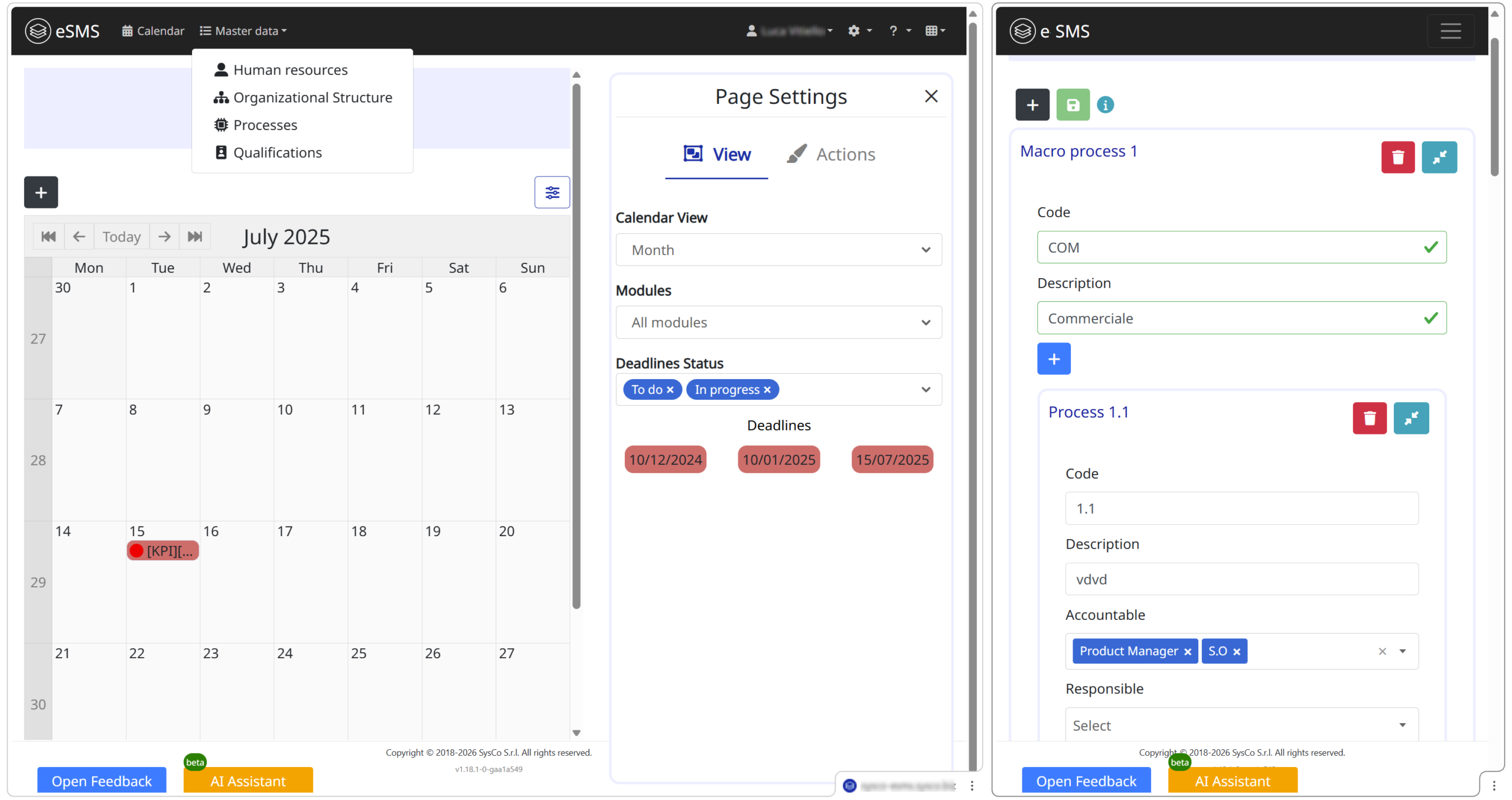
eSMS
The modern and intuitive suite designed to digitize and centralize the organizational processes of Railway Operators, streamlining the daily activities of the Management System Manager.
- Centralized Planning: Consolidates all activities, deadlines, and milestones into a single, integrated calendar for total oversight.
- Organizational Management: Easily manage the company’s organizational structure, defining roles, responsibilities, and hierarchies.
- Core Registries: Centralizes common master data and business processes to ensure information consistency across all modules.
- Workflow Optimization: Designed by industry experts to simplify the complex tasks of Safety Management Systems through a user-friendly interface.
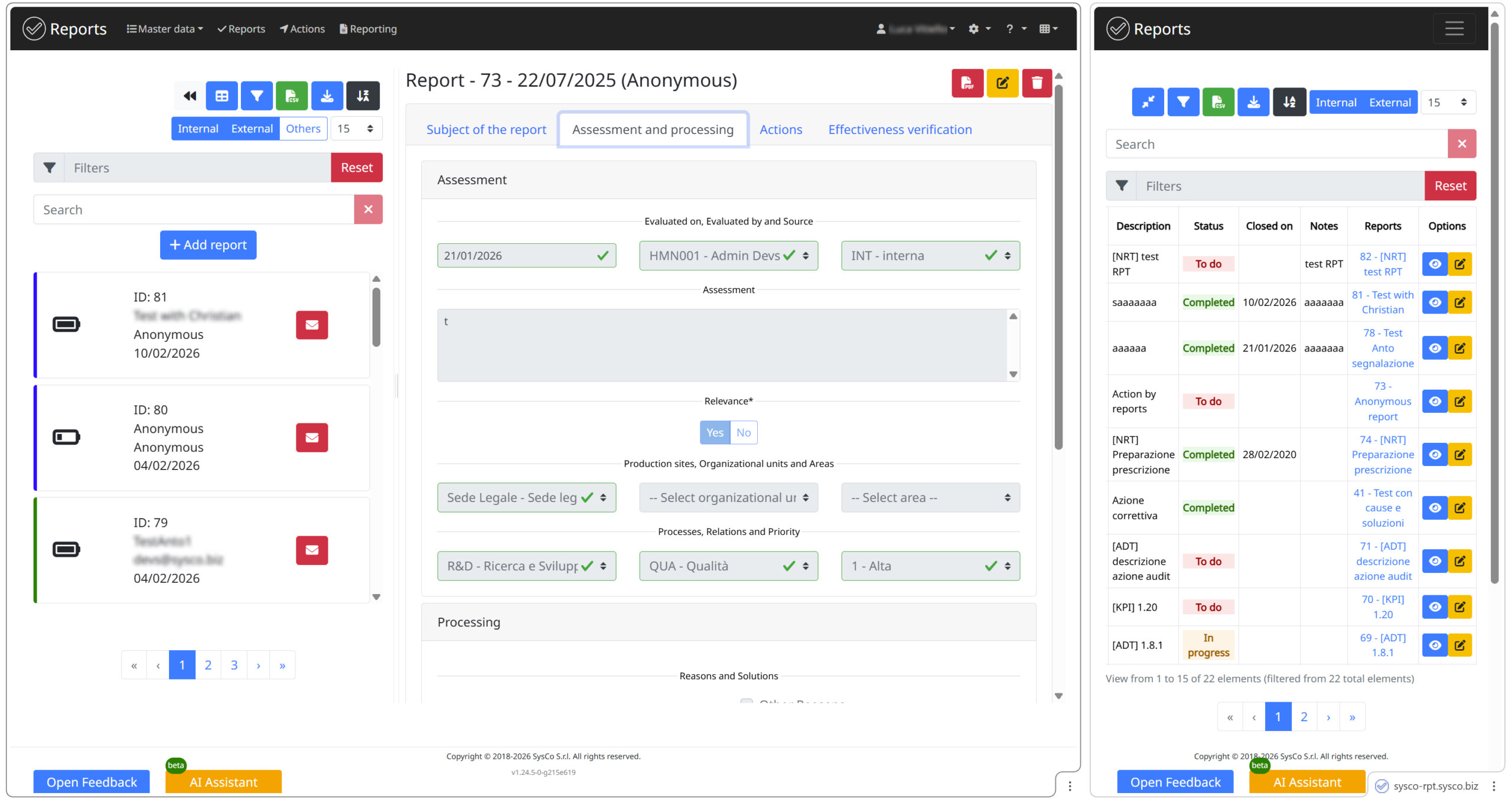
Reports
The Reports module is the central safety hub, ensuring that every report is transformed into a concrete and traceable action.
- Compliance & Change Management: Fully compliant with Regulation (EU) No. 402/2013 (CSM-RA) and its amendments, featuring dedicated tools for change management.
- Multi-channel Reporting: A single collector for managing reports (including anonymous ones), as well as corrective and preventive actions.
- Universal To-Do List: Acts as a centralized hub for actions generated by all other modules in the suite, providing users with a single, streamlined task list.
- Lifecycle Monitoring: Allows for tracking the entire evolution of an event, from the initial report to the verification of the effectiveness of the actions taken.
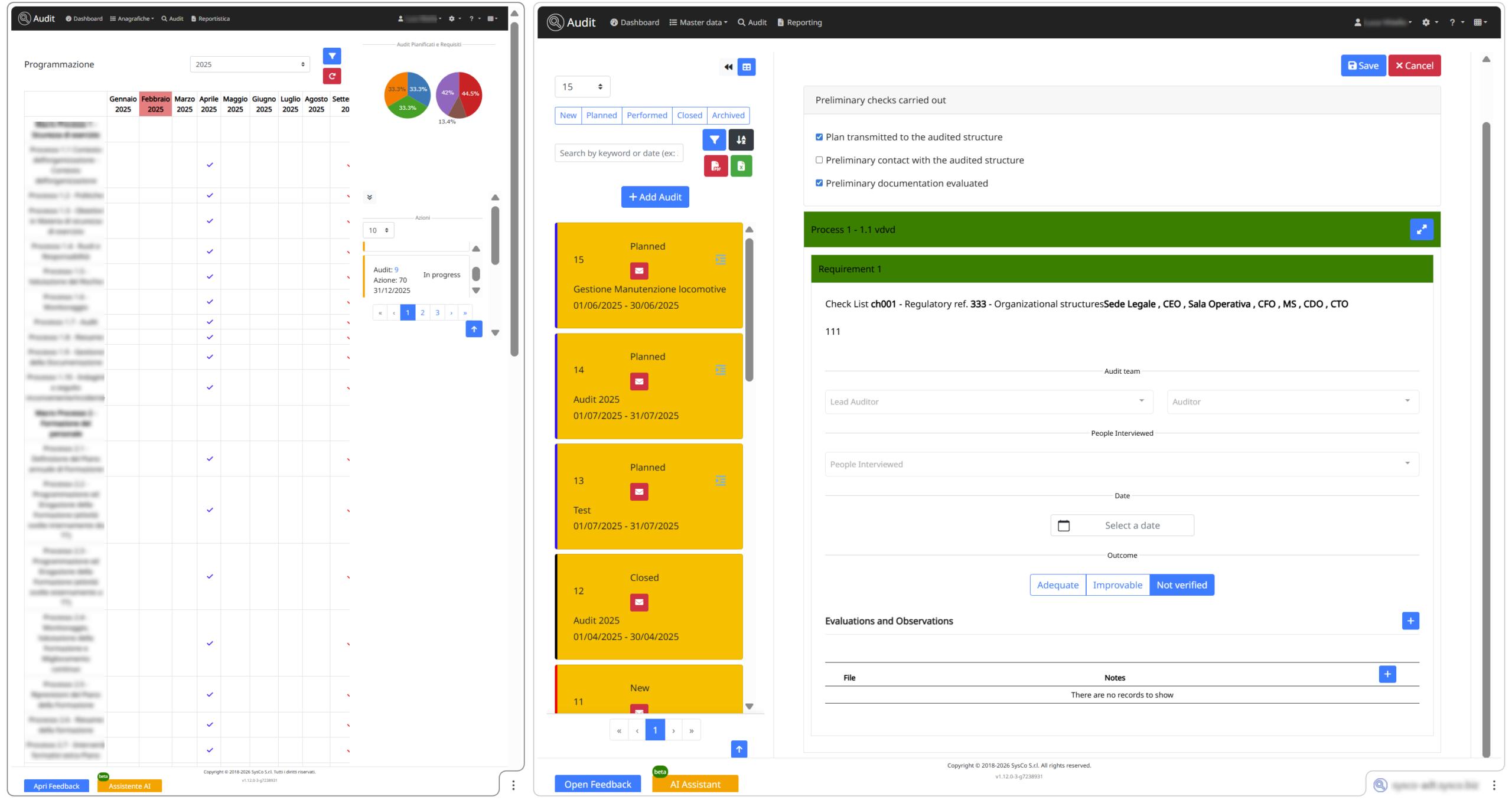
Audit
The Audit module digitizes the entire inspection cycle, turning periodic checks into a tool for continuous, traceable improvement.
- End-to-End Management: Dedicated software for planning, executing, and monitoring inspections within a single digital workflow.
- Operational Efficiency: Optimizes field verification activities, reducing management time and minimizing the risk of errors.
- Full Traceability: Ensures complete traceability of audit reports, collected evidence, and activity progress status.
- Action Tracking: Directly links audit findings to corrective and preventive actions, streamlining the closure of non-conformities.
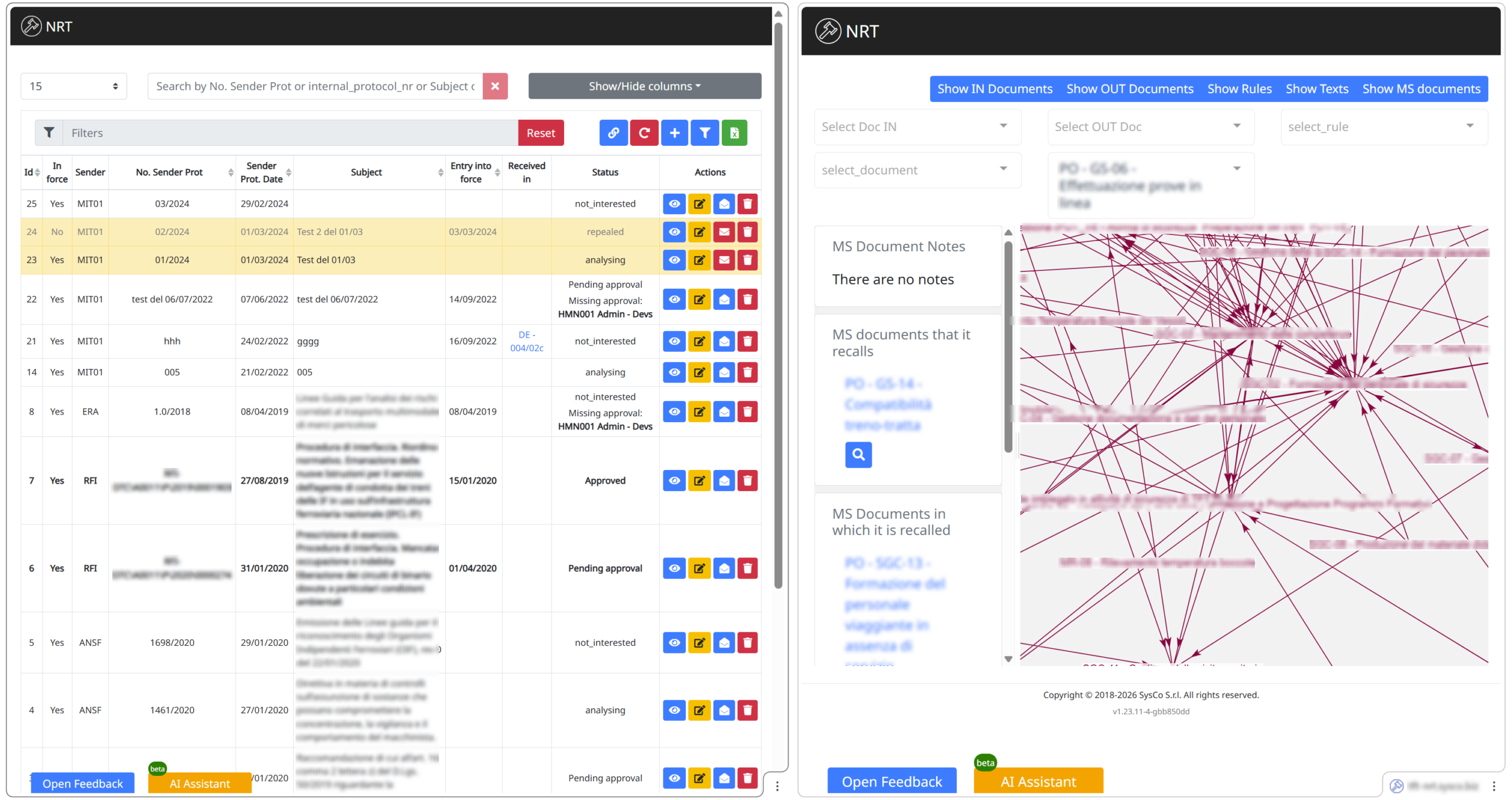
NRT
The core of your regulatory compliance and professional drafting.
- Centralization: A single digital repository to manage the entire regulatory dataset (provisions, requirements, manuals).
- LaTeX-Based Drafting: Advanced editing system leveraging LaTeX standards to ensure professional typesetting, precision, and automated management of indexes and cross-references.
- Visual Mapping: Exclusive graphical tools to navigate and identify hierarchical relationships between reference documents.
- SMS Integration: Maps direct connections between regulations and Safety Management System processes for total consistency.
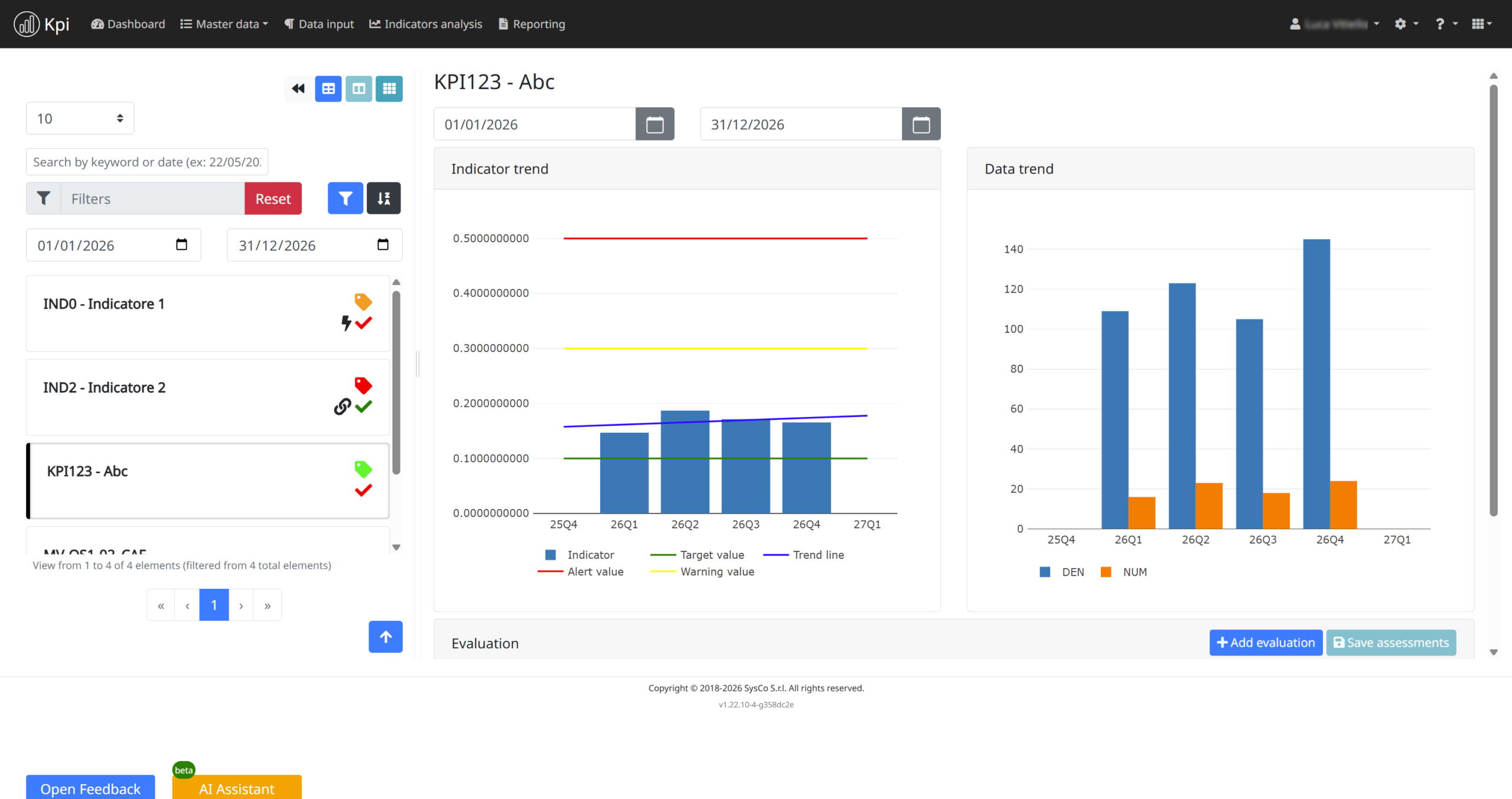
KPI
The KPI module transforms raw data into strategic decisions, ensuring full control over safety performance.
- Advanced Monitoring: Automated system for tracking indicators in full compliance with Regulation (EU) No. 1078/2012.
- Rule-Based Input: Intelligent data management based on predefined rules that guide the user and ensure the integrity of the entered information.
- Automated Data Processing: Streamlines data collection across departments and automates processing, drastically reducing time and the risk of human error.
- Predictive Trends: Leverages advanced historical data analysis to generate future projections and trends, enabling a proactive approach to railway safety.
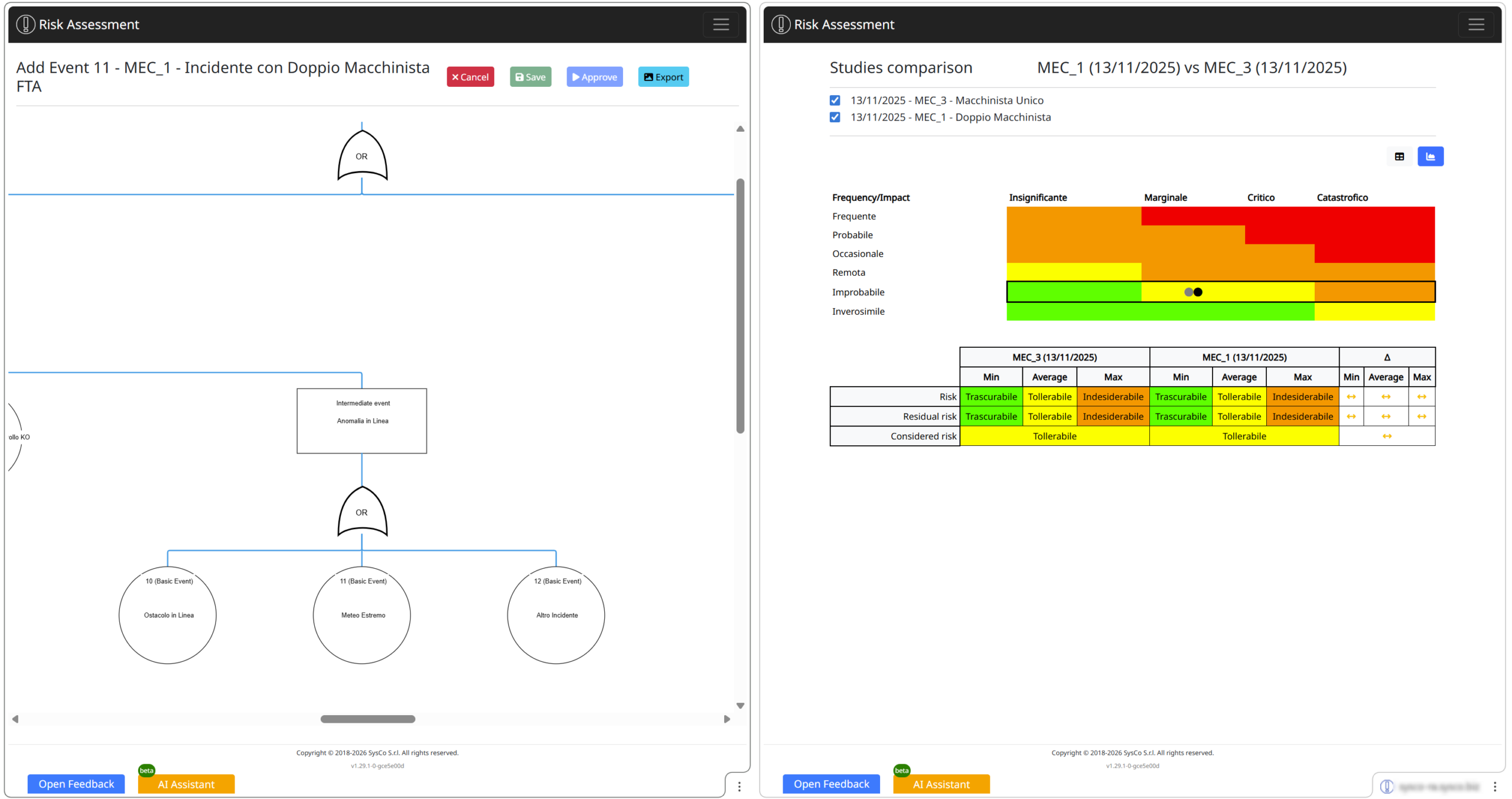
RiskAssessment
The Risk Assessment module transforms risk evaluation from a static process into a dynamic, predictive monitoring tool, fully integrated with the entire suite.
- Advanced Methodologies: Utilizes FTA (Fault Tree Analysis) and ETA (Event Tree Analysis) models for rigorous analysis of scenarios and frequencies.
- Integration & Automation: Enables automated risk assessment by directly leveraging data from the Reports and KPI modules.
- Evolutionary Monitoring: Thanks to data automation, the system updates risk evolution in real-time, allowing for a seamless comparison between historical and current scenarios.
- Protection Planning: Facilitates the definition and management of safety barriers and mitigation actions to control identified risks.