Routability
A tool to ensure vehicles fully comply with their assigned services
A real-time tool that enables:
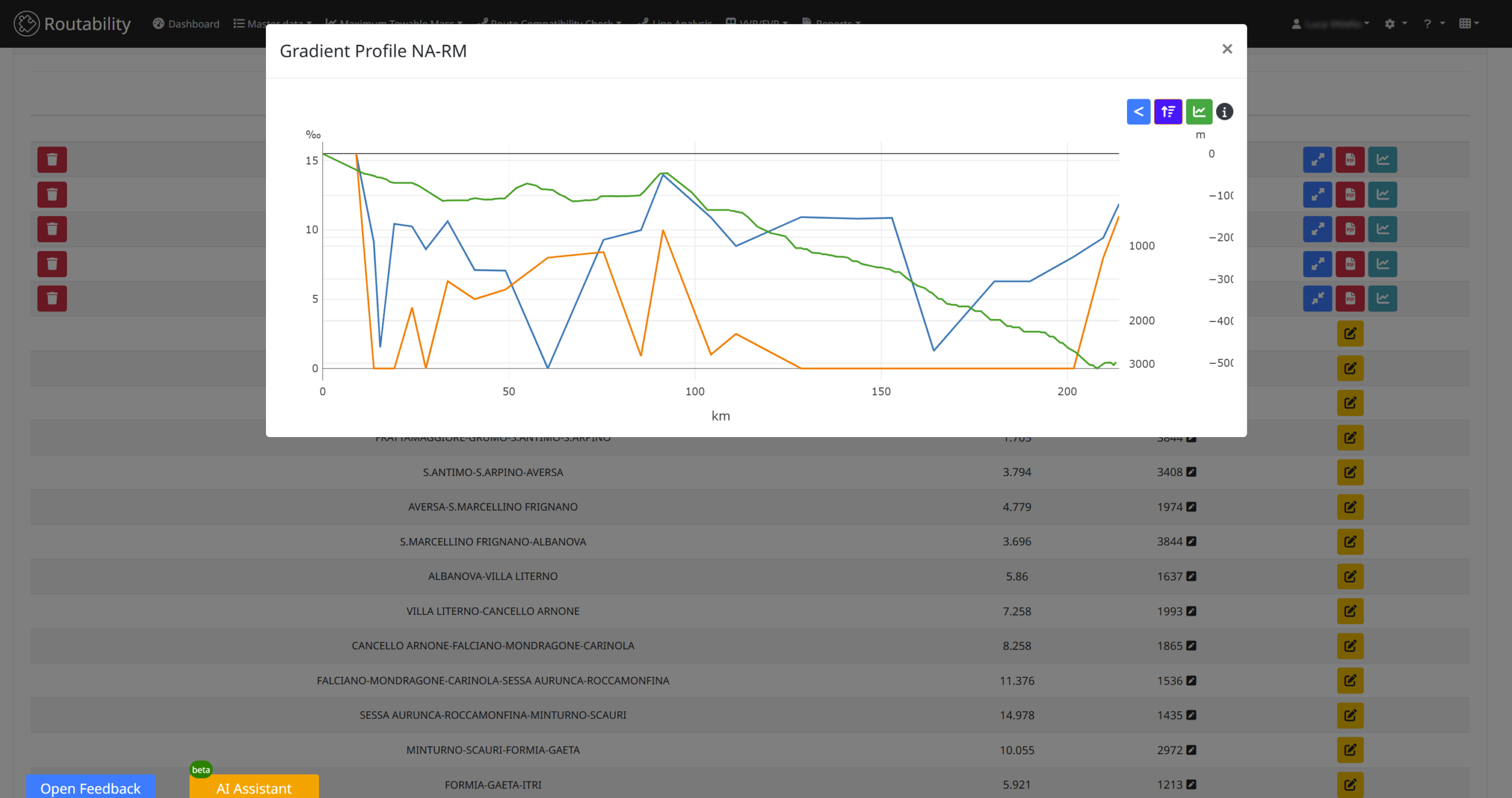
_ Estimation of the Maximum Towable Mass of locomotives
_ Verification of certified VKM and ECM presence on vehicles
_ Route Compatibility Checks (TSI OPE)
_ Generation of Route Books (TSI OPE)
Key Features
- Towing Capacity: Estimate the maximum haulage mass for each locomotive.
- Traction Settings: Accurate calculations for single or multiple traction units.
- Line-Specific Analysis: Performance estimates based on specific railway line characteristics.
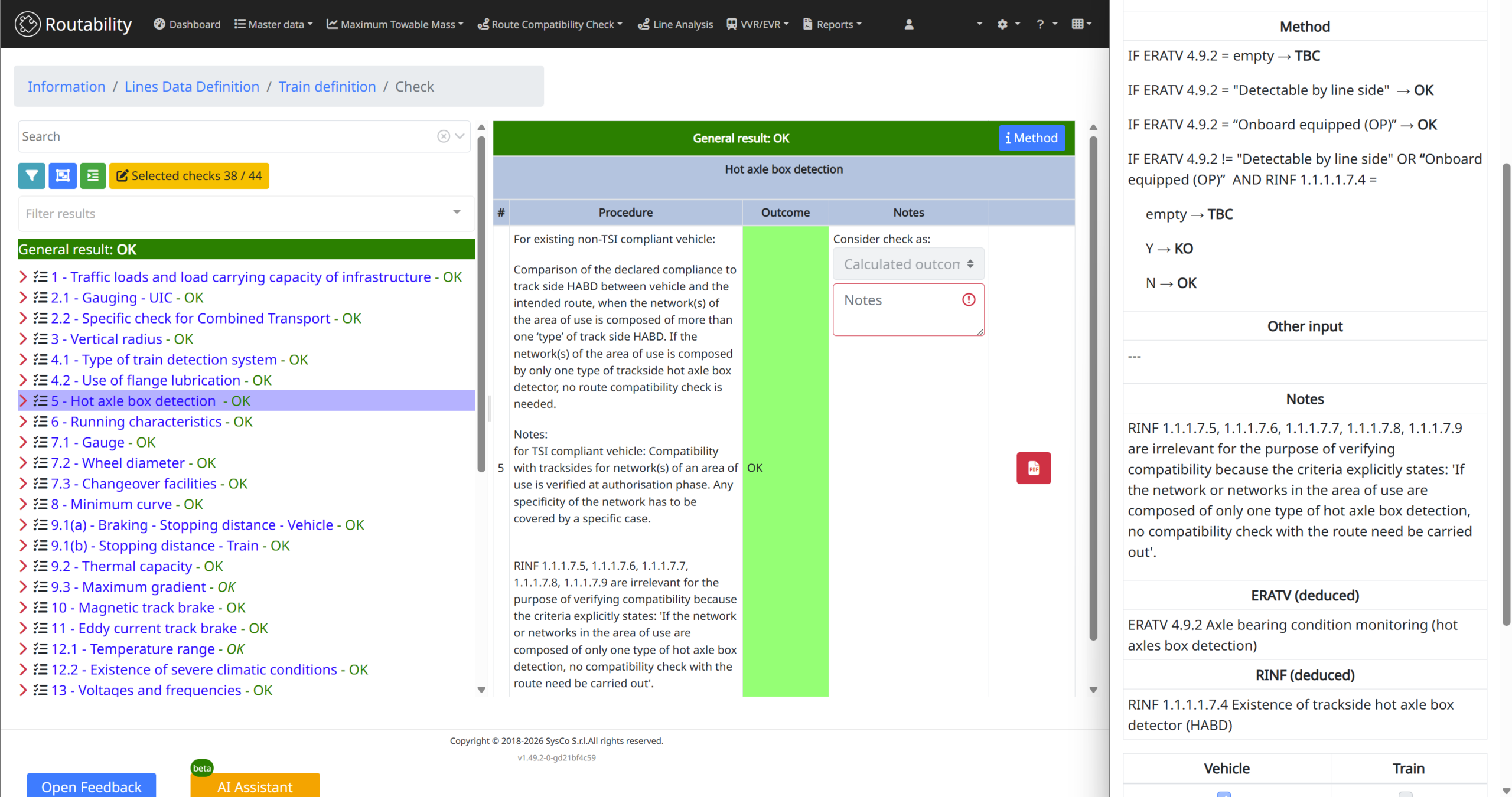
- Route Compatibility: Real-time match between vehicles and lines.
- TSI OPE Compliance: Standardized checks based on Interoperability specs.
- Custom Criteria: Define your own technical and operational criteria.
- Monitoring: Automated alerts if infrastructure or vehicle changes affect your results.
- Instant Validation: Immediate feedback on route feasibility.
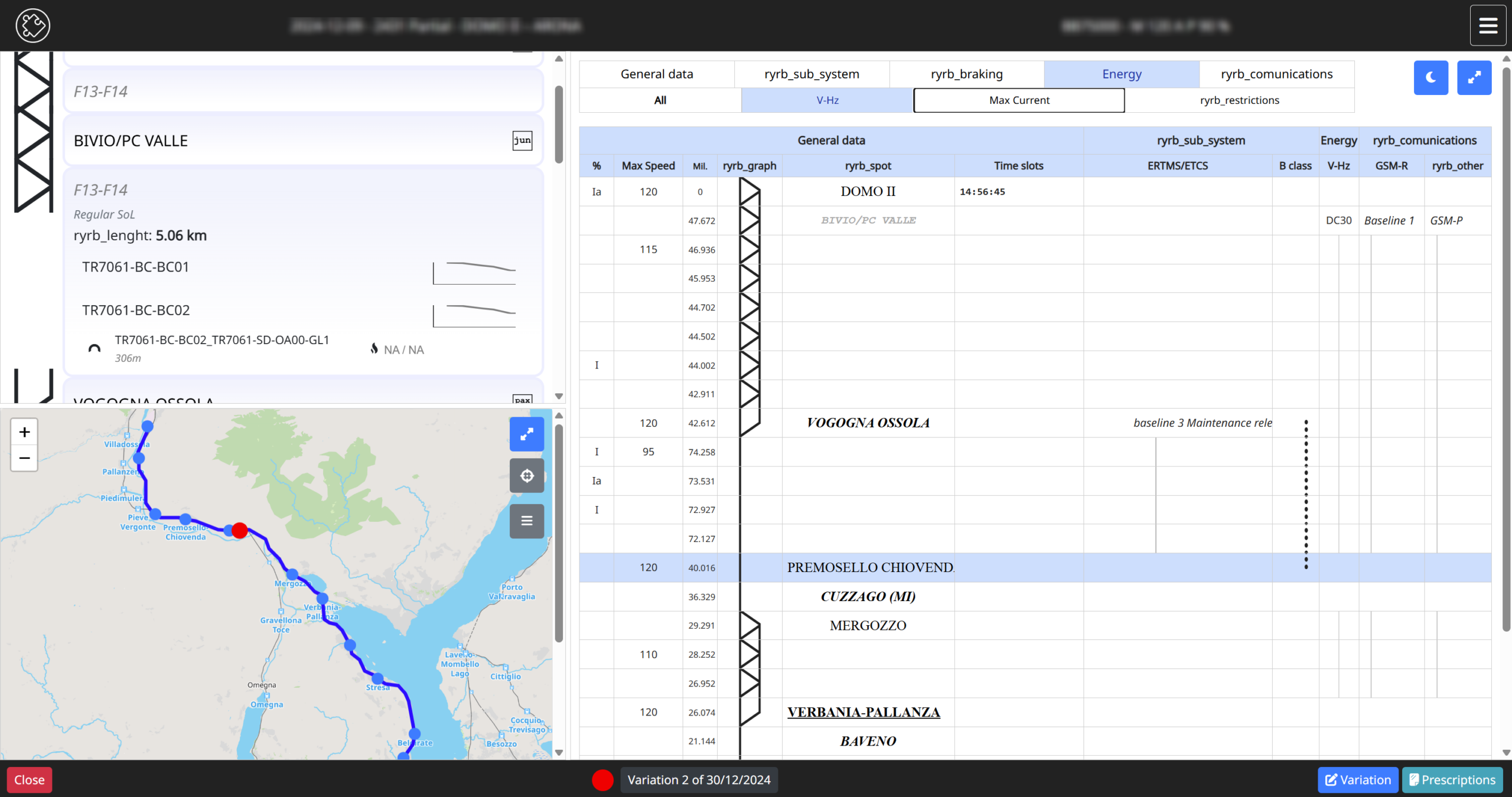
- TSI OPE Compliance: Standardized digital Route Books.
- Flexible Editing: Modify content based on operational needs.
- Mobile Access: Fully digitized experience for staff on the move.
- Regulatory Consistency: Data-driven and always compliant.
Additional Features
Benefits
Productivity
Adoptability
Flexibility
Scalability
Traceability
Compliance
Paper-free
Affordability
FAQ
Can I check if a train is compatible with a specific route before operating the service?
Routability helps railway undertakings verify whether vehicles are compatible with their assigned routes by combining train data, infrastructure data and operational parameters. The system supports Route Compatibility Checks and provides clear results for the vehicles and line sections concerned.
Do Route Compatibility Checks always need to be performed manually?
No. Routability is designed to automate checks that would otherwise require the manual verification of large amounts of data. This improves traceability, reduces repetitive manual work and supports compliance with the TSI OPE framework.
Can RINF and ERATV data be used directly for railway compatibility checks?
Yes. Routability uses RINF infrastructure data and ERATV vehicle type data as part of the route compatibility process. These sources help railway undertakings compare vehicle characteristics with infrastructure characteristics in a structured and traceable way.
What happens if data are missing or incorrect in the official reference registers?
Routability manages an additional data layer to complement official reference registers when information is missing, incomplete or not fully aligned with operational needs. This second layer can include manually maintained data or data imported in bulk from national infrastructure sources, infrastructure managers or other validated references. In this way, railway undertakings can still perform route compatibility checks in a controlled and traceable way, without being blocked by gaps or inconsistencies in the official registers.
Do I have to define all Route Compatibility Check rules on my own?
No. Routability is designed to support railway undertakings in structuring the information and rules needed to perform route compatibility checks in a clear and traceable way. SysCo’s expert team supports the railway undertaking during the specification process, helping define the rules, data requirements and verification logic to be included in the technical dossier. This allows the company to formalize its route compatibility procedures and apply them consistently within the system.
Can drivers access the Route Book digitally?
Yes. SysCo’s Route Book solution helps railway undertakings prepare, update and distribute Route Book information digitally. Drivers can request, update and consult route information through a simple interface designed for operational use.
How can I comply with the TSI OPE Route Book requirements?
The Route Book solution supports railway undertakings in compiling Route Book information using data supplied by infrastructure managers and other relevant sources. It is designed around the TSI OPE framework and the need to describe operational conditions related to line and vehicle characteristics.
Do I need to start from scratch to create a Route Book?
No. The Route Book process can combine track identification, train characteristics, prescriptions and infrastructure information to generate the expected Route Book. This helps structure the transition from fragmented documentation to a digital, data-driven process.
What happens if the driver doesn’t have a connection?
The Route Book solution supports offline consultation, allowing drivers to access route information even when connectivity is limited. This is essential for operational continuity and usability in real railway environments.
Can Route Book information be updated in real time?
Yes. The Route Book solution supports real-time updates and notifications, helping railway undertakings manage changes and provide drivers with updated operational information when needed.
Do I need to fill in all Route Book data manually?
No. SysCo’s Route Book solution is designed to automate and simplify data collection as much as possible. It can synchronize with official infrastructure data, integrate with third-party systems to import train path characteristics and limitations, and connect with national infrastructure sources to access restrictions and operational updates. Manual editing remains available for specific cases, but the goal is to avoid duplicated work and support the railway undertaking in creating a reliable, updated and traceable digital Route Book.
Can the Route Book be adapted to country-specific requirements?
Yes. The Route Book is designed to support country-specific data, documents, criteria and display rules. This is important because infrastructure information, operational documents and Route Book practices may differ between countries and infrastructure managers. SysCo supports the railway undertaking in analysing these requirements and configuring the solution accordingly.